Teaching elementary students about renewable energy both inside and outside the classroom can be difficult because renewable energy is not specifically mentioned within the elementary Next Generation Science Standards in fourth grade, where it is specifically mentioned as a standard. In the fourth grade Sustainability for Young Learners course, renewable energy is explained to students in a way that helps young learners understand renewable energy and the benefits of using renewable energy.
About the Renewable and Nonrenewable Energy Lesson
In this unit plan titled, Renewable and Nonrenewable Energy Sources & their Impacts, students learn about renewable and nonrenewable energy sources and their impacts on the environment. Students learn about wind, solar, and hydropower, how these renewable energy sources work, and the positive environmental impact that renewable energy systems have on the environment.
Students also learn about nonrenewable energy sources, such as coal and oil, how these sources are finite, and the negative environmental impacts that these energy sources have on our environment when extracted and burned for fuel. Students also learn how we use oil, including for electricity, to run our vehicles, and to make plastic. This lesson will cover how we use all forms of energy in our daily lives. Through a group activity in lesson five, the class will work on identifying ways that they can reduce their reliance on fossil fuels to help do their part to create a healthier environment. To end the lesson, students work together as a class to make a pledge to reduce their use of nonrenewable energy sources and reduce their electricity use in the process.
Teaching children about renewable and nonrenewable energy is important for a number of reasons. First, it allows students to understand the difference between different types of energy sources and what makes an energy source renewable or nonrenewable. Having an understanding at a young age that some energy sources, such as coal and oil, are nonrenewable and finite allows students to better understand our energy systems and the need to transition to a clean energy economy.
Teaching students about renewable energy also allows them to learn about and see science in action, where they can see that solar panels can turn on lights in a home. There are many science experiments that teachers can do in their classroom and parents can do at home that allow students to see solar panels working in action. One experience includes getting a toy that is attached to a solar panel and showing students how this toy can move when the solar panels are outside in the sun. Students can even try covering up the solar panel with a towel or dark sheet of paper to see how the toy stops moving when the sun is not hitting the solar panels, which can help students better understand that solar panels rely on the sun to work.
Applying the Renewable and Nonrenewable Energy Sources Unit Plan Outside the Classroom
The Renewable and Nonrenewable Energy Sources & their Impacts unit plan was designed to teach fourth grade students about renewable energy resources to fulfill two of the grade level’s Next Generation Science Standards. Although the lesson plans were designed for fourth graders in a classroom setting, these lesson plans can be modified to be taught outside of the classroom or to students in other grades.
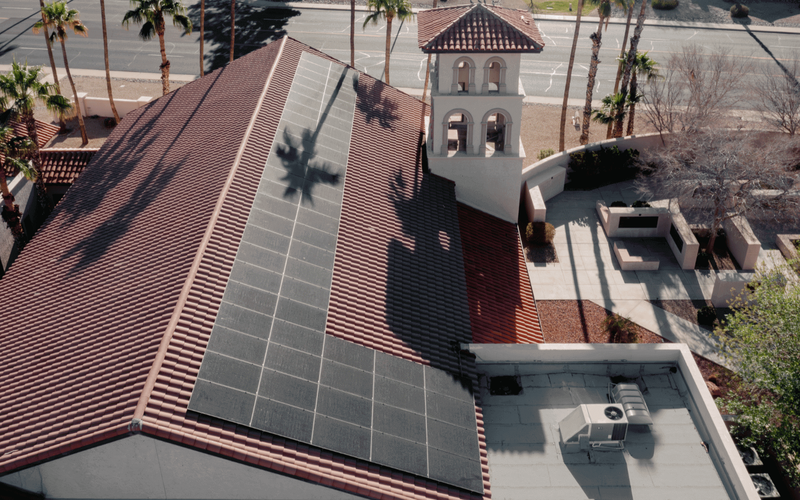
For parents wanting to teach their child about renewable energy, this is a great resource to follow, especially to include as a fun educational opportunity to teach during summer break. In addition, including fun projects can also engage your child in the lesson and make it more engaging. One engaging activity that can accompany this lesson is to walk around your neighborhood and see if any houses have solar panels on their roofs or visit a local business that has solar panels visible from the street. This way, your child can see the solar panels up in their community.
There are many small solar chargers or solar toys used for science experiments that can also be used that allows your child to gain hands-on experience using a small solar panel to power a light bulb, to propel a small toy car, or to charge an electric device. These types of small solar panels work very similarly to large rooftop solar panel arrays, which can be helpful when teaching young learners about renewable energy and solar.
Download the Unit Plan & Powerpoint Additional Sustainability-Themed Educational Resources
If you’re looking for additional sustainability-themed unit plans for elementary school, we have also created unit plans focused on a number of sustainability topics for second, third, and fifth grades. These unit plans all focus on a different sustainability topic and can be modified to teach students in various grades.
For second graders, check out the unit plan titled, Our Melting Oceans: Solid and Liquid Water, for third graders check out the unit plan titled, Ocean Plastic: The Problem and the Solution, and for fifth graders preview the unit plan titled, Climate Change: Reducing Food Waste and Composting as a Solution.
Want more solar insights for nonprofits?
Get the latest updates on solar projects, community impact, and how you can help. No spam.